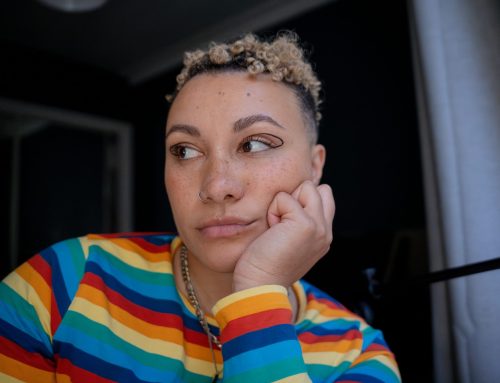
The Silent Kind of Struggle: When Suicidal Thoughts Don’t Look Like You Expect

Mental Health in Plain Sight: Stories of Struggle and Recovery, Brought to Light
Mental Health in Plain Sight is a collection of first-person blogs written in the voice of Rea. Rea isn’t just one person—they reflect many voices: our alumni, our community and countless others who have walked through the ups and downs of mental health and recovery.
Through Rea, we share the everyday struggles that often stay hidden, bringing them into the light where they can be seen and understood. Rea’s voice says, “You’re not alone.” These stories are here to spark connection, lessen the weight of isolation and remind us that healing begins when experiences are spoken and shared.
The Silent Kind of Struggle: When Suicidal Thoughts Don’t Look Like You Expect
I thought suicidal thoughts only happened in moments of crisis — the kind where someone is visibly falling apart, where the pain is loud enough for everyone to hear.
For me, they were quiet. They showed up while I was answering emails, laughing with friends or making dinner. I didn’t look “suicidal” — whatever that means?! I looked busy. Engaged. Even happy sometimes. But beneath the surface, there was a steady hum of hopelessness — a whisper that asked, “What’s the point?”
The Myth of “Obvious”
We’re taught to watch for the big warning signs: someone withdrawing from loved ones, giving away possessions or saying goodbye. And while those can be real indicators, suicidal thoughts can also hide behind a smile, a calendar full of commitments, and an image of being “fine.”
Sometimes it looks like:
- Wondering if it would matter if you didn’t wake up tomorrow.
- Fantasizing about escape — not death itself, but relief.
- Living life on autopilot, without joy or meaning.
Because I didn’t fit the stereotype, I convinced myself it wasn’t “serious enough” to talk about. That was part of the danger.
How It Intersected with My Eating Disorder
My eating disorder became another layer of silence — a distraction from the real pain. It gave me something tangible to focus on, something I could control, while my thoughts grew darker in the background.
Both my eating disorder and my suicidal thoughts stemmed from the same place:
- Feeling like I was a burden
- Believing my worth depended on achievement or appearance
- Exhaustion from pretending to be okay
The truth is, eating disorders and suicidal thoughts often coexist, and each can intensify the other. Without help, they can create a dangerous cycle.
What I Wish I’d Known
- Suicidal thoughts don’t have to be loud to be dangerous.
- You don’t have to wait until you hit “rock bottom” to ask for help. If the thoughts are there, they matter.
- Your value doesn’t disappear just because you can’t feel it right now. Hopelessness is a state, not a life sentence.
A Note: If This Feels Familiar
If any part of my story sounds like yours, please know this: your struggle is valid, even if it’s quiet. You are not a burden. You are not beyond help.
For me, speaking the words out loud — no matter how small the admission — was the first step toward finding relief. Recovery has been about building a life I want to stay for, not just one I can survive.
If you or someone you care about is experiencing suicidal thoughts, the most important first step is to seek immediate help. Please call 911 or go to the nearest emergency department immediately. You can also reach out to a trusted family member, friend, or support person.
Call or text 988 for immediate support from the Suicide & Crisis Lifeline.
At Reasons Eating Disorder Center, we understand the complex connection between eating disorders and suicidal thoughts. We are here to provide compassionate, specialized care and to remind you: your life matters.